Presentations & Advocacy
CPS OSCPA SWAP 2025 Presentation
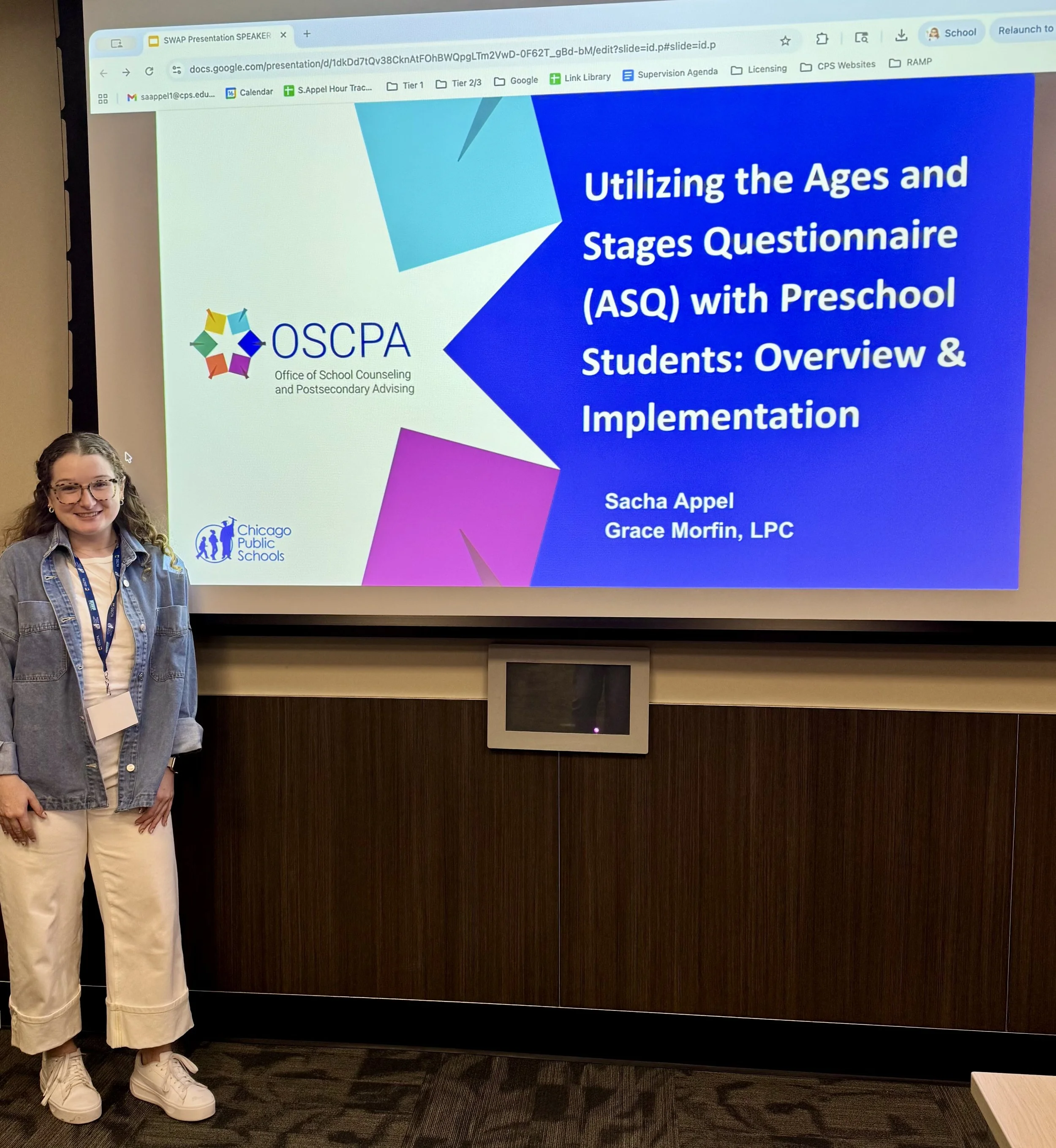
Utilizing the Ages and Stages Questionnaire with Preschool Students: Overview & Implementation
At the Chicago Public Schools School Counseling and Postsecondary Advising SWAP Conference, I co-presented a session as a school counseling intern with my supervisor on the Ages and Stages Questionnaire: Social-Emotional, Second Edition (ASQ:SE-2) with preschool students. The SWAP Conference is an annual mini-conference created by and for school counselors and postsecondary coaches to exchange best practices and innovative, student-centered approaches. Drawing from our shared school-based practice, the presentation highlighted how early social-emotional data can guide counseling decisions, inform schoolwide supports, and strengthen collaboration with teachers and families. The session emphasized moving from reactive responses to proactive support so counselors feel more confident supporting young students with big feelings.
Treating Trauma & PTSD In Homicidally Bereaved Children & Adolescents
In the course during my masters program at Loyola University Chicago, Introduction to Clinical Mental Health Counseling, myself and two other students were tasked with creating a professional poster and handout for a conference on a clinical concern in a specific population . We chose to examine trauma and PTSD in children who have experienced homicide personally or in their community. We also presented our findings to our class in a conference format.
Advocacy Statement
Effects of Mental Health on Students Due - The Covid-19 Pandemic
In my final course at DePaul University, Capstone Seminar in Early Childhood Education, I created an advocacy statement on an issue in education that I found pressing and that am passionate about: an infographic addressing new mental health issues students are facing because of quarantine and the pandemic. On the first page, you will see statistics on how mental health has been impacted. On the second page you will see quotes from scientists and journals explaining what teachers, parents, medical professionals, and school districts need to do to address this new mental health crisis. Finally, on the last page, you will see the sources I used.